
Maltese History · c. 800–218 BC
Phoenician & Punic Malta
For more than five centuries, the Maltese Islands formed part of a maritime world connected by trade, migration, writing, religion, agriculture, and the movement of people and material across the Mediterranean.
Overview
An island society within a connected Mediterranean.
From the eighth century BC, the Maltese Islands became increasingly embedded in the Phoenician and later Punic worlds of the Mediterranean. The archaeology records neither a simple foreign takeover nor an isolated colonial outpost, but a locally distinctive society shaped through movement, exchange, adaptation, and continuity.
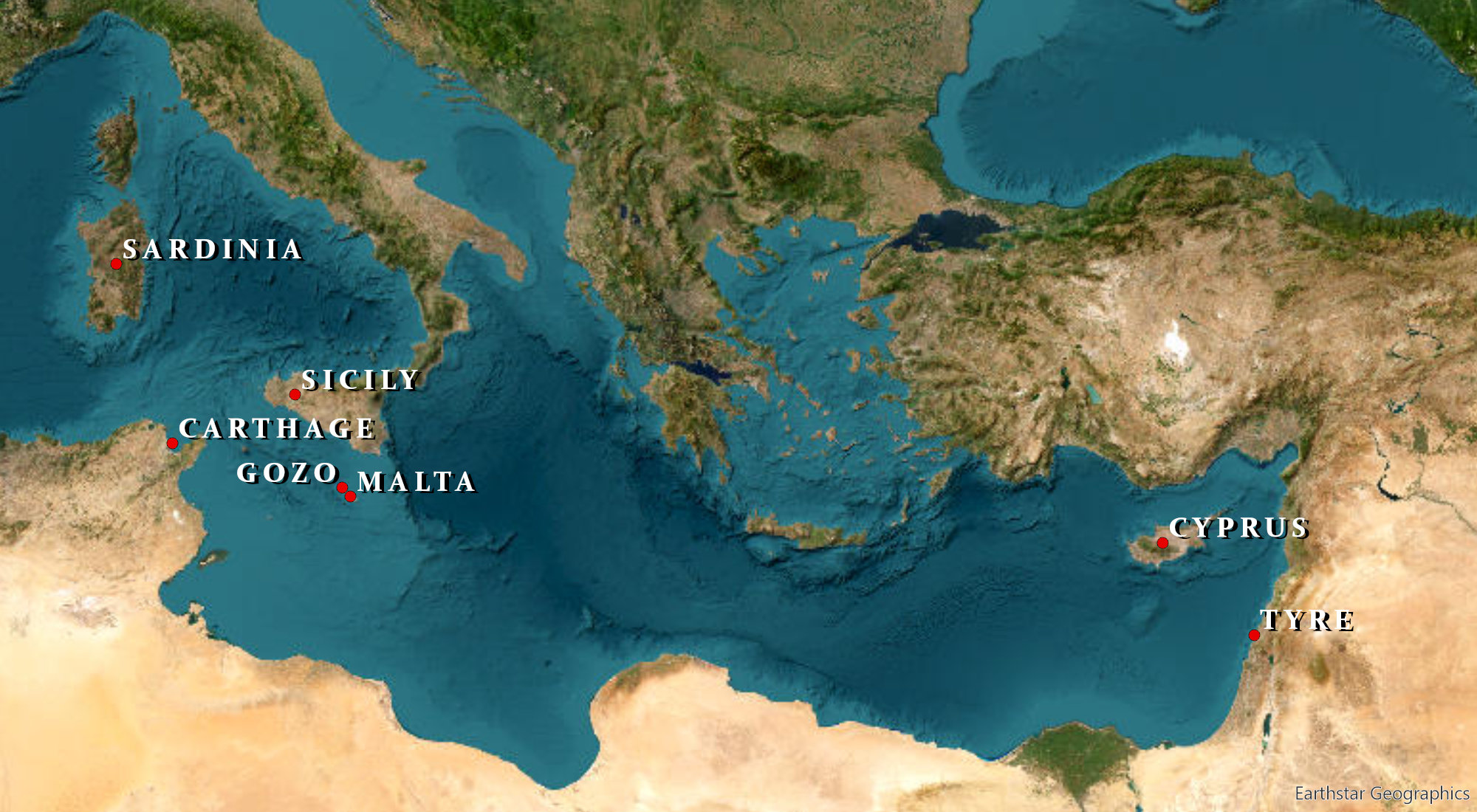
Malta occupied an important strategic position between Sicily and North Africa, between the eastern and western Mediterranean. Phoenician material is securely visible by the eighth century BC, with some of the earliest evidence coming from tombs around the Mdina–Rabat area rather than from a clearly defined coastal colony.
Over the following centuries, cemeteries expanded, local ceramic traditions developed, rural estates and agricultural installations became more visible, and sanctuaries connected local communities with wider Mediterranean networks. Tas-Silġ, overlooking Marsaxlokk Bay, became the archipelago's best-documented Phoenician and Punic ritual centre, while the Xlendi Bay shipwreck off Gozo preserves exceptional evidence for maritime exchange.
In 218 BC, during the opening year of the Second Punic War, Malta passed from Carthaginian to Roman political control. That date is a useful historical boundary, but it was not a cultural reset. Punic language, ceramics, religious traditions, and social practices continued into the Roman period.
01
Names, Identities, & Archaeology
Phoenician, Punic, and Carthaginian
The terminology used for this period can make the past appear more straightforward than it was. Phoenician conventionally refers to communities, languages, cultural traditions, and networks whose historical roots lay in the cities of the eastern Mediterranean coast—including Tyre, Sidon, and Byblos—and to communities established or transformed through Mediterranean expansion. Punic is generally used for the central and western Mediterranean societies that developed within those networks during the later first millennium BC.
Neither term should be treated as the name of a single, homogeneous population or an unchanging ethnic identity. People moved, intermarried, adopted languages and practices, maintained local traditions, and participated in multiple overlapping networks. An object made in a recognisably Phoenician or Punic style therefore does not inherently identify the ancestry or self-understanding of the person who made or used it.
Carthaginian is more specific. Carthage, on the North African coast, became a major political and economic power in the central and western Mediterranean. Malta eventually formed part of a world in which Carthage exercised substantial influence and, by 218 BC, military and political authority. Archaeology does not, however, reveal a single moment when everyone on Malta suddenly became “Carthaginian.” Local traditions and connections with areas now recognised as Sicily, Syria, Lebanon, Palestine, Greece, Tunisia, Libya, Egypt, and elsewhere continued to overlap.
A 2025 genome-wide study of Phoenician- and Punic-associated populations elsewhere in the Mediterranean found considerable genetic diversity and little direct eastern Mediterranean ancestry in many central and western Punic communities. Malta was not among the sampled populations, so those results cannot simply be transferred to the islands. They nevertheless reinforce a broader archaeological point: shared language, religion, material culture, and political affiliation do not require a single biological origin.
02
The Eighth and Seventh Centuries BC
The first Phoenician presence
The transition between Malta's final Bronze Age communities and the first securely recognisable Phoenician material remains one of the most debated parts of the islands' early history. Earlier scholarship sometimes pushed Phoenician settlement back towards 1000 BC, but the chronology of several key ceramic assemblages has since been reassessed. Nicholas Vella's review of the evidence argued that a securely identifiable Phoenician presence need not be placed before approximately the middle of the eighth century BC.
Some of the most important early evidence comes not from a port but from burial grounds around the Mdina–Rabat plateau. Tomb assemblages include locally produced red-slipped and burnished ceramics alongside imported Greek vessels and objects belonging to broader Cypriot and eastern Mediterranean traditions. From the beginning, therefore, Malta's Phoenician-period archaeology reflects several networks at once rather than a simple connection between the islands and one Levantine homeland.
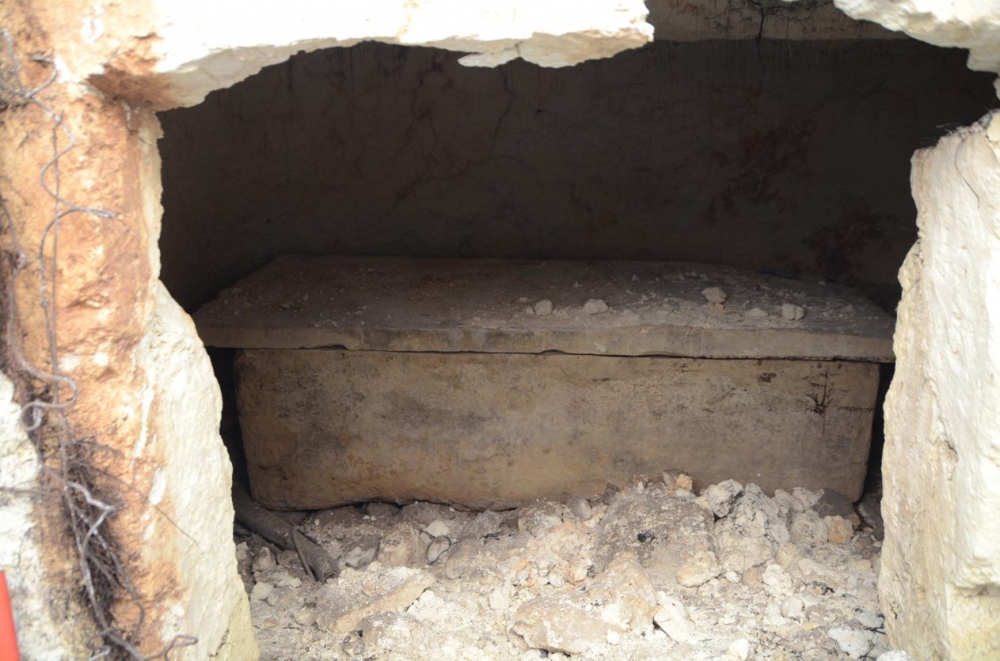
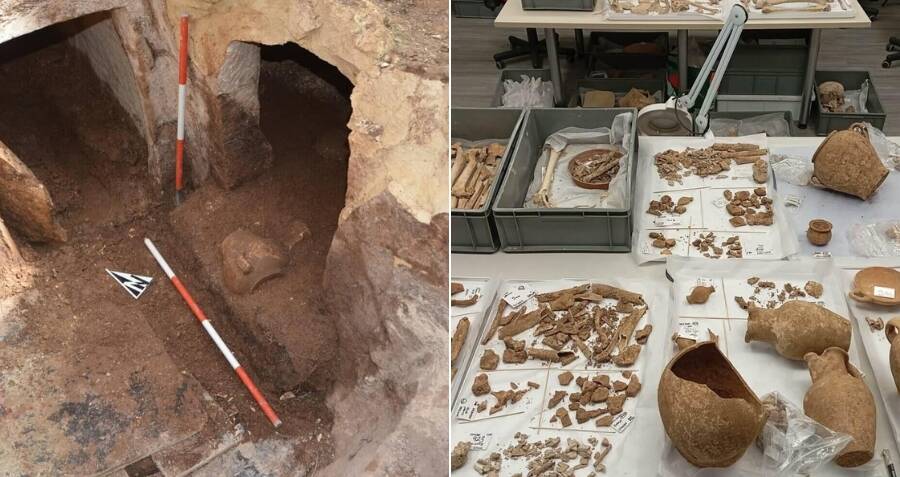
The cemetery at Għajn Klieb and Għajn Qajjet is especially significant. Modern work there has revisited a burial landscape known to antiquarians and archaeologists for more than a century. A stone sarcophagus excavated from a rock-cut tomb contained two individuals, jewellery, ceramic vessels, and an animal burial. The context has been assigned a date of around 600 BC and provides an unusually undisturbed, well-documented window onto early Phoenician funerary practice.
03
Across the Central Mediterranean
Islands connected by sea
Maritime movement is fundamental to Phoenician history, and Malta's location made the archipelago relevant to routes linking Sicily, North Africa, the eastern Mediterranean, and the western Mediterranean. The islands lacked the major metal resources that drew traders to some other regions, but they offered sheltered anchorages, agricultural land, and a strategic position within sea lanes crossing the central Mediterranean, ultimately meaning power and control.
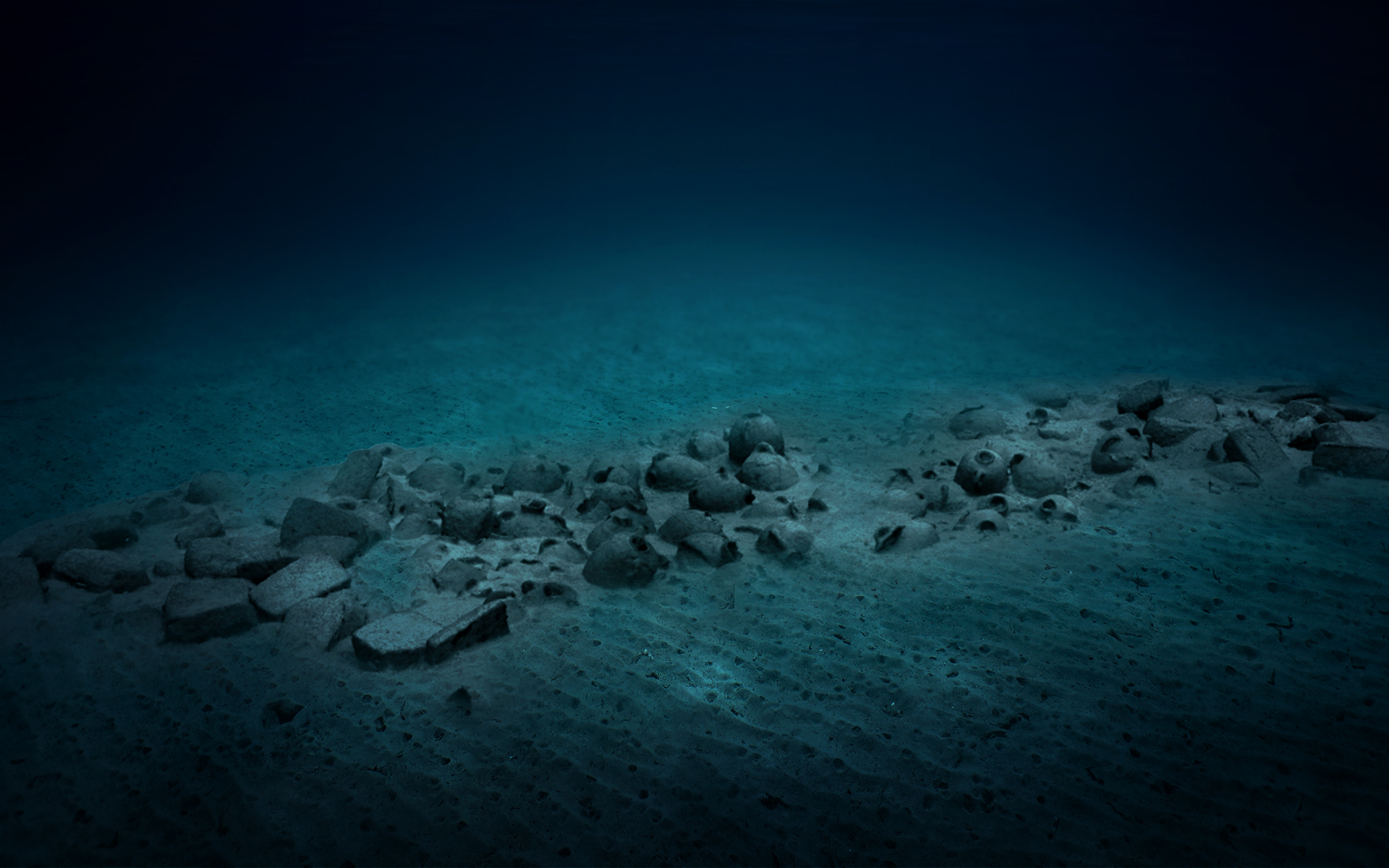
The clearest archaeological demonstration lies approximately 110 metres below the sea off Xlendi Bay, Gozo. A Phoenician shipwreck discovered there preserves a mixed cargo dating to the seventh century BC. Amphorae, ceramics, and volcanic stone querns show that the ship was carrying goods drawn from more than one production region. Petrographic analysis has identified links with the Maltese Islands, North Tunisia, and possibly Sicily.
The wreck is important precisely because its cargo is heterogeneous. It captures commercial movement through a connected maritime system rather than a closed route between two fixed points. Similar patterns appear on land, where imported ceramics and other objects circulated alongside local products.
04
Living Landscapes
Towns, cemeteries, farms, and shrines
For much of the history of Maltese archaeology, the geography of Phoenician and Punic settlement was reconstructed largely from tombs. The densest early cemetery evidence occurs around the Mdina–Rabat region, strongly suggesting an important inland settlement in the area that later developed into the ancient city of Melite. This differs from the familiar model of an early Phoenician colony established directly beside a harbour.
Other burial clusters developed around the Grand Harbour. The largest clusters included Għajn Dwieli, tal-Liedna, Kordin, and tal-Ħorr, with their earliest known burials generally appearing later than those around Rabat. Gozo preserves a smaller documented funerary record, but this cannot be equated automatically with limited occupation. Patterns of modern development, discovery, preservation, and excavation strongly affect what survives.
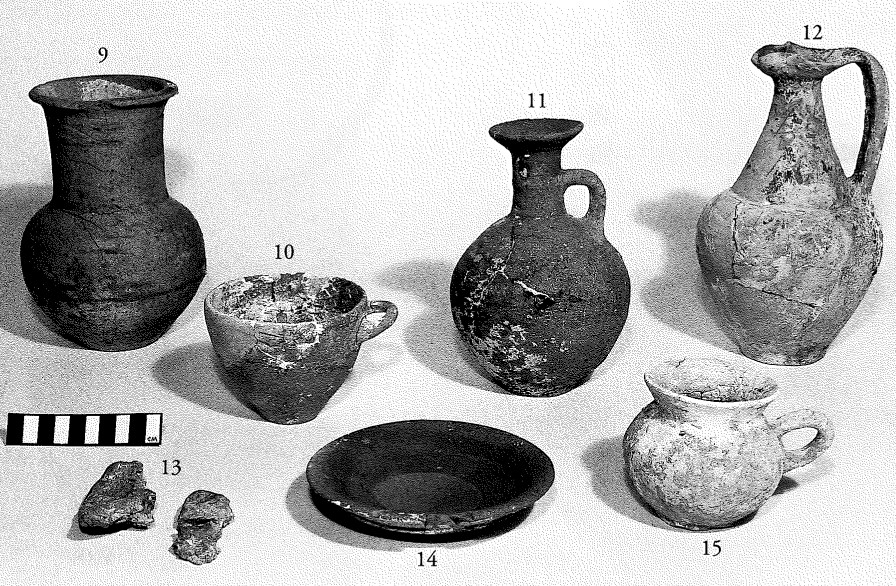
By the later Punic period, a broader settlement landscape becomes visible. Rural establishments at places such as Żejtun and San Pawl Milqi, sanctuaries including Tas-Silġ, smaller shrines in Gozo, agricultural landscapes, cemeteries, and maritime sites together reveal an island society distributed across interconnected urban, rural, sacred, and coastal spaces.
05
Ritual, Architecture, & the Sea
Tas-Silġ: a sacred place repeatedly remade
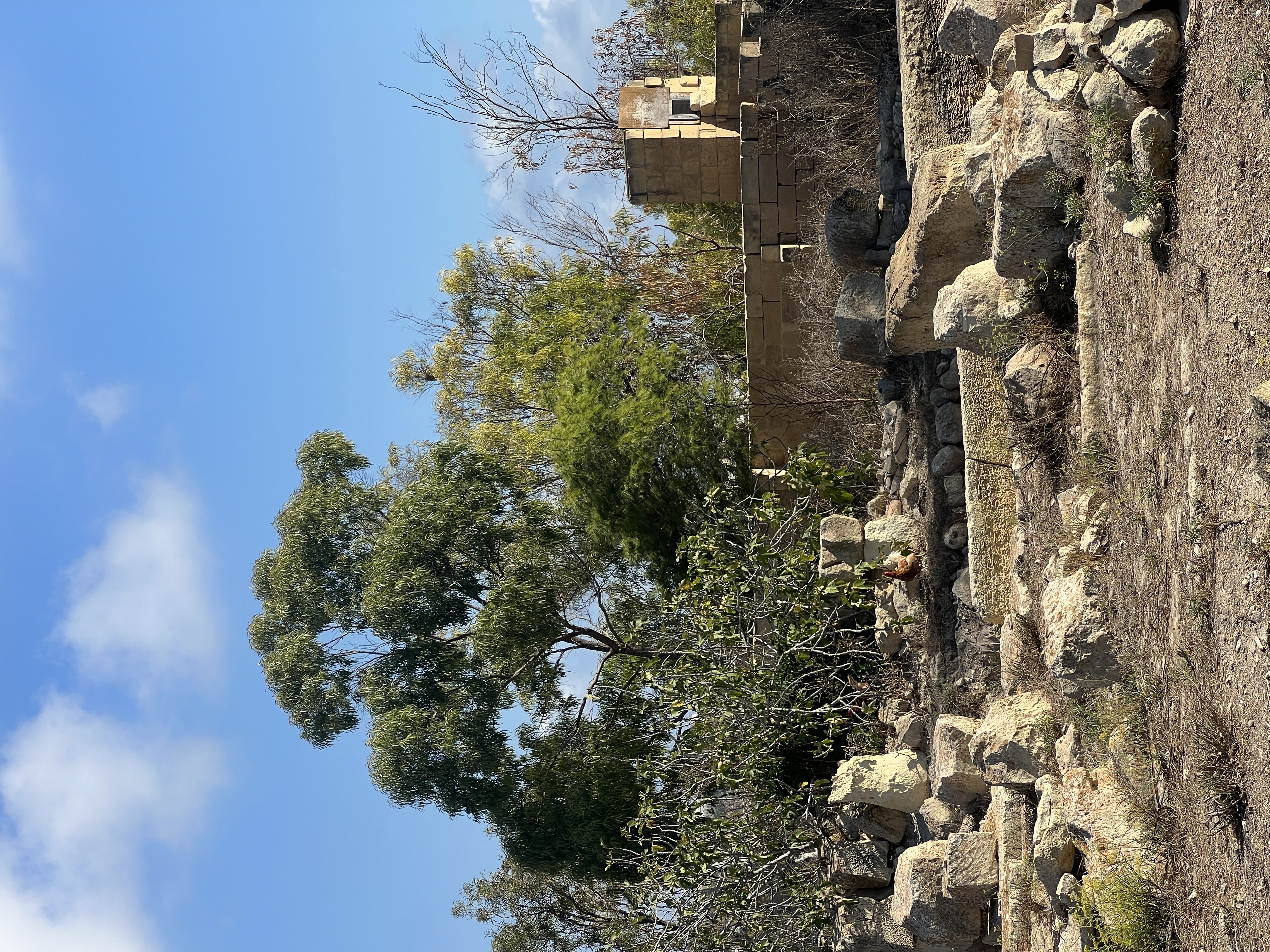
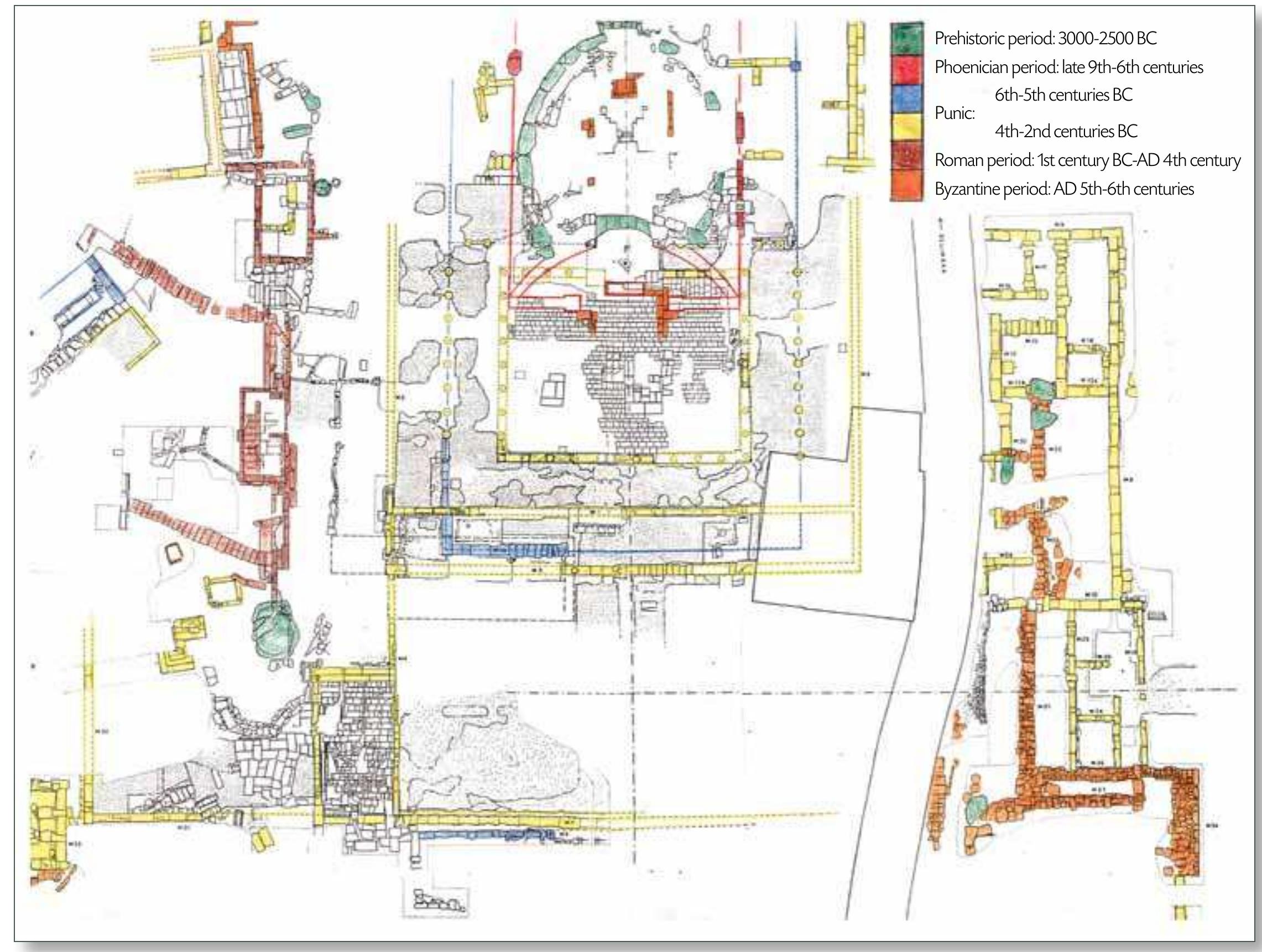
Tas-Silġ, overlooking Marsaxlokk Bay in south-eastern Malta, is one of the most important archaeological sites for understanding Phoenician and Punic Malta. The site had a much older history consisting of prehistoric monumental architecture and later Bronze Age activity, which preceded the establishment of a Phoenician sanctuary there in approximately the later eighth century BC.
The Phoenician builders did not erase everything that came before. Parts of the earlier prehistoric complex were incorporated within the new sanctuary of Astarte. Over subsequent centuries the architecture was repeatedly enlarged, adapted, monumentalised, and reframed. Egyptianising architectural forms, local limestone construction, Hellenistic elements, and older features existed together within a site whose appearance and meaning changed through time.
Tas-Silġ was both local and maritime. Its elevated position above one of southern Malta's most important natural harbours made it visible within the seascape. Imported Greek ceramics and other non-local objects, including Egyptian objects and a cuneiform inscription, demonstrate that the sanctuary participated in wider Mediterranean networks, while the bulk of its material was locally made.
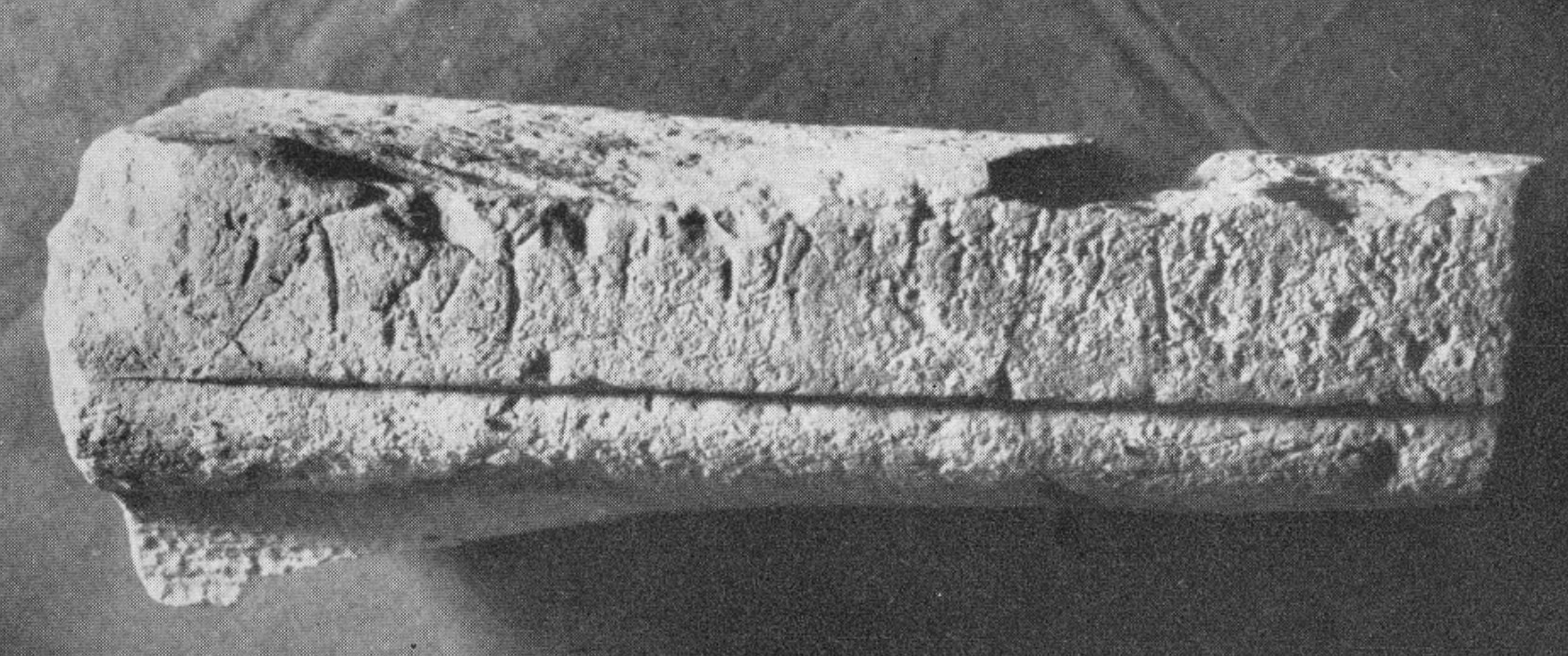
Archaeology reveals religious practice through ordinary activities as much as through monumental architecture. Cooking pots, bowls, plates, amphorae, ash, animal bone, fish, shellfish, jewellery, amulets, and inscriptions document offerings, food preparation, communal meals, and repeated ritual action. Some vessels were explicitly inscribed for Astarte, while other inscriptions refer to priests or the sanctuary itself.
06
Death, Memory, & Community
The landscape of the dead
Rock-cut tombs are among the most widespread surviving sources for Phoenician and Punic life in Malta. George Said-Zammit's 1993 survey catalogued 668 known Punic tombs across Malta, Gozo, and Comino at that time. That figure is historically important rather than final: new burials continue to be found, while many older tombs were destroyed, looted, inadequately recorded, or encountered accidentally during construction.
A common tomb form consisted of a shaft leading to one or more chambers cut into the limestone. These spaces were often reused. New interments could be added while earlier bones and grave goods were moved or reorganised, creating burial places with histories spanning several generations.
Both inhumation and cremation were practised, and their relative popularity changed through time. Grave assemblages could include amphorae, lamps, plates, cups, jugs, urns, jewellery, amulets, perfume containers, imported objects, and other possessions. These materials help reconstruct trade, chronology, food and drink, social distinction, bodily treatment, and funerary practice—but they do not provide a simple dictionary of beliefs about the afterlife.
Rare sarcophagi demonstrate the diversity of burial practice. Anthropoid and non-anthropoid terracotta examples combine local manufacture or use with artistic conventions that have eastern Mediterranean and Egyptianising parallels. The stone sarcophagus from Għajn Klieb adds a well-recorded context to a record long dominated by antiquarian discoveries.
07
Language, Dedication, & Memory
Writing changes the evidence
The Phoenician period marks a major change in the kinds of evidence available for Maltese history: people living on or visiting the islands left written texts. Phoenician was a Northwest Semitic language written primarily through a consonantal alphabet. Most surviving texts are short, but even a handful of letters can identify a deity, owner, offering, ritual action, or personal name.
Tas-Silġ preserves the largest and most important concentration of this evidence. Inscriptions occur on ceramics, ivory, and architectural stone.
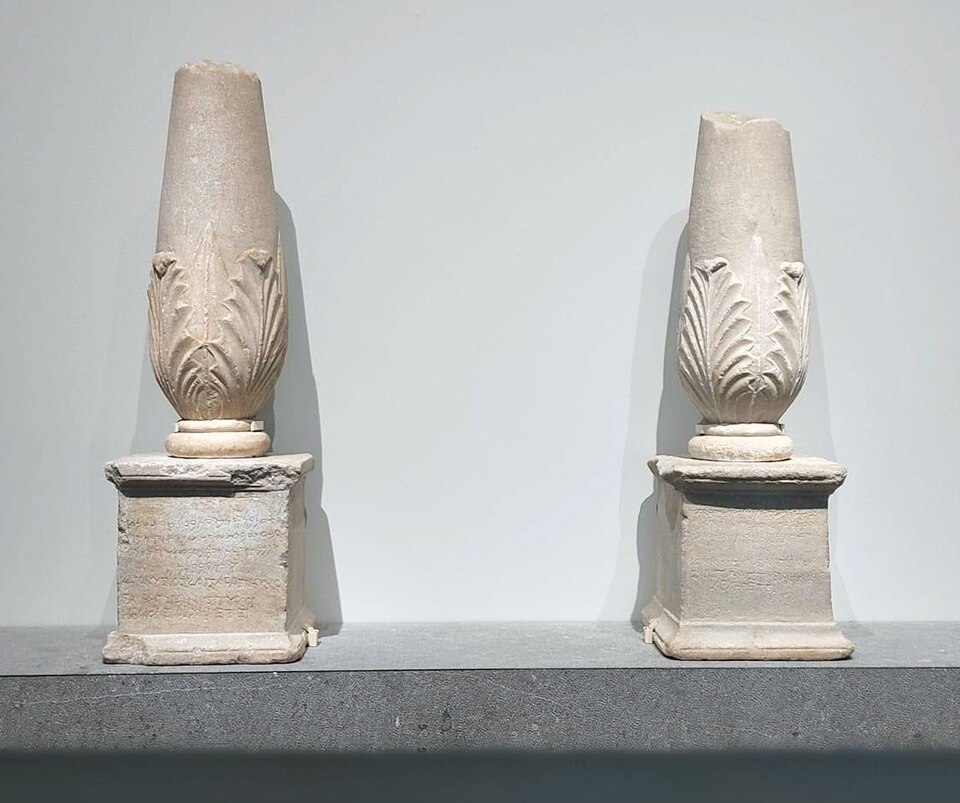
The most famous examples from Malta are the Cippi of Melqart, a pair of marble votive monuments carrying equivalent dedications in Phoenician and Greek. The Phoenician text invokes the god Melqart, while the Greek text identifies the equivalent god as Herakles. The cippi were discovered in Malta under poorly documented circumstances and are generally dated to the second century BC.
Their importance extends into the history of scholarship. Because the same dedication appeared in two scripts and languages, the cippi became crucial evidence for eighteenth-century efforts to understand the Phoenician alphabet, often eliciting a comparison to the Rosetta Stone. One cippus remains in Malta; the other was taken by the Knights of St John and gifted to Académie des Inscriptions et Belles-Lettres in France in 1782 and is now in the Louvre.
08
Objects as Evidence
Ceramics and everyday material culture
Ceramics provide much of the chronological framework for Phoenician and Punic Malta, but they are also evidence for storage, cooking, artificial lighting, transport, ritual practice, technology, and trade. Early assemblages include red-slipped and burnished bowls, jugs, amphorae, lamps, and cooking wares related to wider Phoenician traditions, while imported Greek and other foreign vessels occur alongside locally made products.
Handmade vessels are especially instructive. Such ceramics occur within Phoenician and Punic contexts alongside wheel-made wares. Their presence has sometimes been interpreted as evidence for indigenous people or specific social groups, but manufacturing technique is not a reliable ethnic label. At sites such as Żejtun, the evidence demonstrates technological diversity without allowing the identity of individual potters to be reconstructed.
Archaeometric work is increasingly refining this picture. Petrographic and chemical analysis of material from Tas-Silġ and Żejtun has identified multiple local fabric groups, showing that apparently similar vessels could draw on different raw materials and production practices within Malta.
09
Agriculture & Rural Life
The Punic countryside
Tombs dominated older interpretations of Phoenician and Punic Malta partly because cemeteries survived and were discovered more readily than houses or farmsteads. Recent work on rural landscapes has begun to correct that imbalance.
The Żejtun villa site is especially important. Although best known for its later Roman remains, recent excavations demonstrated that the Roman complex developed over earlier Punic activity, including features interpreted as a vineyard. Diagnostic ceramics show occupation from the later fifth or fourth centuries BC onward. The site therefore provides direct evidence for continuity between a Punic rural establishment and the later Roman villa. Similar trends are observed at the villa site of Ta' Kaċċatura.
Elsewhere, field survey and excavation have identified possible Punic farmsteads, rock-cut agricultural installations, water-management features, storage facilities, and evidence for wine and later olive-oil production. At Mġarr ix-Xini in Gozo, rock-cut treading installations and associated landscape features have been interpreted as evidence for viticulture by approximately the sixth or fifth century BC.
Rural production was also connected to religious practice. Offering inscriptions comparable with those from Tas-Silġ occur at Żejtun and San Pawl Milqi.
10
Objects, People, & Ideas
Cultural mixture was normal
Phoenician and Punic Malta cannot be understood by sorting its material record into isolated “Phoenician,” “Greek,” “Egyptian,” “Carthaginian,” and “local” boxes. A burial might combine locally made ceramics with an imported Greek drinking vessel and jewellery using Egyptianising imagery. A sanctuary dedicated to Astarte might receive Greek ceramics. A bilingual monument could address Melqart in Phoenician and Herakles in Greek.
Such combinations do not necessarily represent confused or culturally divided communities. Interaction was an ordinary condition of life in the ancient Mediterranean. Objects, technologies, images, languages, and ritual forms circulated through networks in which people selected and reworked what was useful or meaningful in local settings.
The strongest archaeological questions are therefore not simply “Which civilisation does this object belong to?” but: Where was it made? How did it reach Malta? In what context was it used? Was it repaired or reused? What practices accompanied it? How did its meaning change once it entered an island community?
11
The Second Punic War
218 BC: political conquest, cultural continuity
In 218 BC, during the opening year of the Second Punic War, the Roman consul Tiberius Sempronius Longus sailed from Sicily to Melita. Livy's account states that the Carthaginian garrison commander Hamilcar, son of Gisgo, surrendered the town and island together with nearly two thousand soldiers. No archaeological evidence currently demonstrates widespread destruction associated with the transfer of power.
The date marks a clear political change and provides a useful endpoint for a historical timeline. Culturally, however, the boundary is much less abrupt. Punic ceramic traditions continued, the Punic language remained in use, and religious practices were transformed rather than simply abolished. Tas-Silġ continued as an important sanctuary, where Astarte became increasingly associated with Hera and later Juno.
Rural establishments likewise crossed the chronological boundary between “Punic” and “Roman.” At Żejtun and elsewhere, archaeological sequences demonstrate continuity in occupation and production even as Malta became part of Rome's expanding Mediterranean political system.
The next chapter of Maltese history therefore begins with a change in political sovereignty—not with the disappearance or replacement of the people who lived on the islands and their culture.
Interpreting the Evidence
A connected island.
The centuries between the first Phoenician presence and the Roman conquest profoundly changed society on the Maltese islands. The region participated in a Phoenician-speaking Mediterranean world, but they did not become copies of Tyre or Carthage. Their settlement pattern was unusual, local ceramic industries developed their own trajectories, and communities interacted with Sicily, North Africa, Lebanon, Palestine, Greece, Cyprus, and other regions.
Maritime trade, farming, burial, writing, food preparation, ritual, and architecture all demonstrate that Malta was an active participant within the central Mediterranean rather than a passive recipient of outside influence. Tas-Silġ connected local agricultural and ritual life with the sea; the Xlendi shipwreck preserves movement between production regions; cemeteries record generations of island communities; and inscriptions give rare direct access to language and dedication.
Much remains open. Archaeologists continue to debate the date and character of the earliest Phoenician presence, relationships between migrants and existing island communities, relationshios with other Mediterranean populations, the development of Carthaginian authority, and the social organisation of settlements. New excavation, underwater archaeology, archaeometry, bioarchaeology, epigraphy, spatial modelling, and future biomolecular work will continue to revise the story.
Bibliography
Research used for this page
“Pottery Variability and Site Function: Late Punic and Early Roman Ceramic Assemblages from Ras ir-Raħeb and Other Archaeological Sites in the Maltese Islands.” In LRBT: Dall'archeologia all'epigrafia. Studi in onore di Maria Giulia Amadasi Guzzo, 15–39. Turnhout: Brepols, 2021.
“The Xlendi Bay Shipwreck (Gozo, Malta): A Petrographic and Typological Study of an Archaic Ceramic Cargo.” Libyan Studies 52 (2021): 166–172. University of Malta.
Tas-Silġ, Marsaxlokk (Malta): Archaeological Excavations Conducted by the University of Malta, 1996–2005. Leuven: Peeters, 2015.
“Tas-Silġ: From Prehistoric Temple to Byzantine Church.” Current World Archaeology 59 (June/July 2013): 18–24.
“I resti faunistici provenienti dagli scavi di Tas Silġ a Malta: testimonianze di pratiche rituali.” In Atti del 6° Convegno Nazionale di Archeozoologia, 357–363. 2012.
“The Cargo of the Phoenician Shipwreck off Xlendi Bay, Gozo: Analysis of the Objects Recovered Between 2014–2017 and Their Historical Contexts.” International Journal of Nautical Archaeology 50, no. 1 (2021): 3–18.
“Le iscrizioni puniche.” In Missione Archeologica Italiana a Malta: Rapporto preliminare della Campagna 1966. Rome: Università degli Studi di Roma, 1967.
Ab Urbe Condita 21.51. Account of the Roman capture of Melita in 218 BC.
“An Archaeological and Archaeometric Study of Late Punic–Roman Pottery from the Tas-Silġ Sanctuary and the Żejtun Villa, Malta.” Libyan Studies (2024).
“Punic People Were Genetically Diverse with Almost No Levantine Ancestors.” Nature 643 (2025): 139–147. DOI.
The Archaeology of Punic Malta. Ancient Near Eastern Studies Supplement 9. Leuven: Peeters, 2002.
The Archaeology of Malta: From the Neolithic through the Roman Period. Cambridge: Cambridge University Press, 2015.
“The Punic Tombs of the Maltese Islands.” Proceedings of History Week (1993): 67–80.
“Phoenician and Punic Malta.” Review and reassessment of the chronology, settlement pattern, and archaeological models for Phoenician Malta.
“A View from the Countryside: The Nature of the Late Punic and Early Roman Activity at the Żejtun Villa Site, Malta.” Rivista di Studi Fenici 45 (2017): 109–143.
“Malta and Gozo.” In The Oxford Handbook of the Phoenician and Punic Mediterranean, edited by Carolina López-Ruiz and Brian R. Doak, 553–568. Oxford: Oxford University Press, 2019.