Tell the Truth About Settlement
We will work to ensure that our interpretation of migration and Maltese-Canadian settlement does not erase Indigenous presence or diminish its impacts.
Open by appointment only
Book a Visit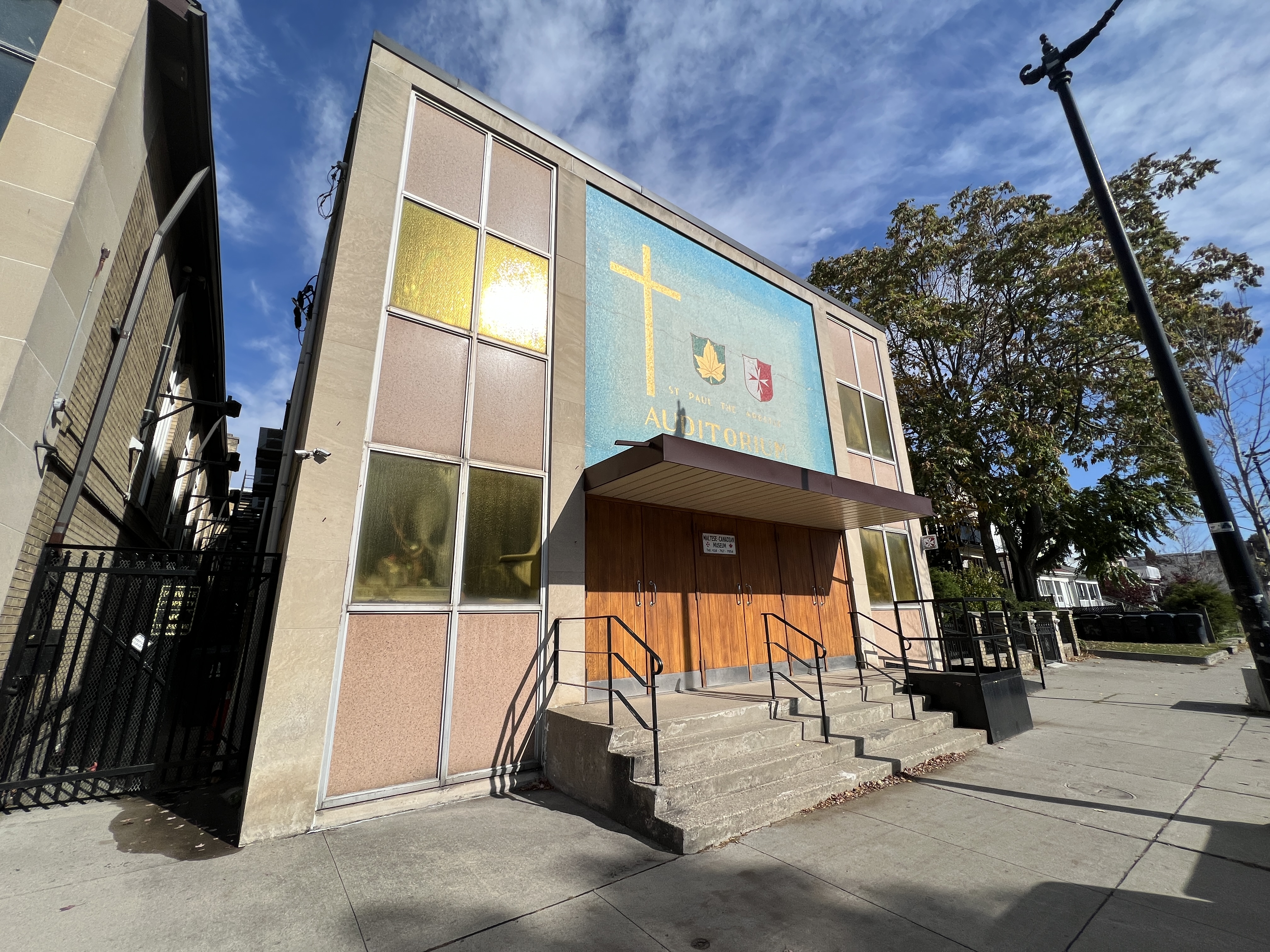
Visit the Museum
Find the Maltese-Canadian Museum in Toronto's historic Maltese-Canadian community along Dundas Street West.
Find Us
The Museum is located within the St. Paul the Apostle Church complex in Toronto.
Map
Use the interactive map below to explore the surrounding area and plan your route to the Museum.
Land & Treaty Acknowledgement
The Maltese-Canadian Museum is situated in Toronto on the Treaty Lands and Territory of the Mississaugas of the Credit First Nation , within the lands covered by the Toronto Purchase, Treaty No. 13.
We also recognise these lands as the traditional territory of the Wendat and Haudenosaunee peoples, and acknowledge Toronto as home today to diverse First Nations, Inuit, and Métis peoples.
Indigenous peoples have lived with, cared for, governed, and maintained relationships with these lands and waters since time immemorial, and those relationships continue in the present.
We acknowledge that the development of Toronto as a settler city occurred through violent colonial processes that dispossessed Indigenous peoples, disrupted communities and cultures, and sought to undermine Indigenous sovereignty, governance, languages, and relationships with the land.
As a museum dedicated to the history of a settler and immigrant community, we have a particular responsibility to recognise that Maltese-Canadian settlement and community-building in Toronto did not take place on empty land.
The homes, churches, businesses, clubs, organisations, and institutions established by Maltese Canadians form part of a history that unfolded on Indigenous lands and within the continuing context of treaty relationships and colonialism.
Acknowledgement Must Lead to Action
A land acknowledgement alone does not constitute reconciliation. The Maltese-Canadian Museum supports the Truth and Reconciliation Commission of Canada's Calls to Action , including the responsibilities placed upon museums through Call to Action 67.
As our Museum grows, we are working to ensure that our collections, exhibitions, research, partnerships, and institutional practices respect Indigenous sovereignty, self-determination, treaty rights, histories, cultural heritage, and living communities.
We will work to ensure that our interpretation of migration and Maltese-Canadian settlement does not erase Indigenous presence or diminish its impacts.
Indigenous communities have authority over their own histories, cultures, heritage, knowledge, and cultural belongings. We will seek appropriate consultation when our work concerns Indigenous peoples or heritage.
We have reviewed our collections and acquisition practices for Indigenous belongings, provenance concerns, and colonial collecting histories. We confirm that we do not have any Indigenous belongings in our collection. We support community-directed access, care, restitution, and repatriation of Indigenous belongings.
We seek meaningful relationships with the Indigenous communities whose histories, lands, or heritage intersect with our work.
Indigenous knowledge keepers, artists, researchers, Elders, and collaborators should be respected and fairly compensated for the knowledge and labour they choose to share.
We commit to continuing to learn, listen, revise our practices, and respond when Indigenous communities identify ways in which our work can improve.
We understand reconciliation as requiring truth, justice, treaty responsibility, restitution, respect for Indigenous sovereignty and self-determination, and action against the continuing effects of colonialism.
We offer this acknowledgement not as a conclusion, but as a statement of the responsibilities that come with doing museum work on these lands.
Before You Travel
Because the Museum is currently open by appointment, please arrange your visit in advance and wait for confirmation from Museum staff before travelling.
If you have questions about access requirements, group visits, arrival arrangements, or anything else that may help make your visit easier, please let us know when you contact us.
Visit Us
Contact the Museum to arrange an appointment for an individual, family, research, or community visit.